Derived from nature, crafted for fashion: The transformation journey of a piece of cork bark
Derived from nature, crafted for fashion: The transformation journey of a piece of cork bark
Contact Us
To learn more details, you can directly scan and add myWhatsAppnumber, or send an email tokim@liscork.com.We will contact you as soon as possible.

Tree bark turns into fabric! The recycling process of cork materials
The freshly harvested raw tree bark cannot be directly put into production. It needs to undergo drying and maturation processes to remove the internal moisture and impurities of the tree bark, thereby stabilizing the material properties. After the processing is completed, the large pieces of raw tree bark enter the crushing workshop and are processed into uniform-sized cork chips. The cork particles of various sizes have a warm and lustrous color, retaining the natural light brown tone of the cork itself.
Crushing large pieces of bark into cork chips is a crucial intermediate step. The original intact bark often has issues such as size limitations, numerous flaws, and limited utilization rate. After being crushed, cork particles can fully utilize the leftover bark edges and different grades of bark, significantly improving the utilization rate of raw materials and practicing the concept of recycling. The wood chips will be screened and graded to distinguish the particle size and grade. Different specifications of wood chips will be suitable for different fabric production requirements in the future. After screening, the wood chips are combined with an environmentally friendly adhesive and undergo hot pressing and curing under specific temperature and pressure conditions. The loose particles thus coalesce and transform into sheet-like cork fabrics.


The surface of the cork fabric is covered with the characteristic natural tiny pores of cork, with interlaced and varying shades of mottled patterns. Each piece of fabric has a unique pattern that is not completely replicated. Cork fabric is not a traditional textile, but it possesses the same characteristics as fabric, such as being cuttable, sewable, and bendable. It retains the warm texture of the original cork material while overcoming the shortcomings of the original tree bark, which is hard and difficult to shape. The production team will adjust the thickness and flexibility of the fabric according to the product positioning. Some fabrics are stiff and suitable for making structured bags; others are soft and lightweight, suitable for making cross-body bags or cultural-themed small accessories. Thus, the tree bark from nature has been transformed into a basic fabric that can be used in the fashion industry. And from the fabric to a bag that can be sold in the market, it still requires a long process of design, prototyping, sample testing, and debugging.


Through repeated iterations and refinements, we have unlocked the entire process of cork packaging sample production
A qualified cork fabric, before it can become a mature product, the most crucial step in the process is the new product development and physical sample making. On the workbench, the semi-finished body packages are laid flat on the table. The staff are manually adjusting the fabric for the body's seams and checking the positions of the components. On the table, there are cork key pendants, cork makeup mirrors, cut fabrics, hardware accessories, and scissors tools, fully recreating the real scene of a new product moving from the drawing stage to the physical form.


Many people believe that once they obtain the fabric, they can directly start mass production of bags. In fact, the initial sample production and prototyping of new products is the crucial stage that determines the success or failure of the product. The lines and concepts on the design drawings merely exist on paper. Cork fabric has its own unique material properties. It is different from PU and genuine leather. It has its own specific characteristics in terms of elasticity, bending properties, and splicing effects. The design concepts must be verified through physical prototyping before they can be implemented. During this round of sample production, the designer and the craft workers work collaboratively. They cut the cork fabric and combine it for splicing, creating the first version of the physical sample bag


The on-site debugging work is quite complex: repeatedly comparing the stitching effects of different textured cork fabrics, evaluating whether the texture combinations are aesthetically pleasing; testing whether the fabric will crack after being bent, adjusting the size of the body pieces; debugging the positions of the hardware fasteners on the shoulder straps, verifying the adaptability of the shoulder strap length; checking the smoothness of the zipper opening and closing, optimizing the internal space structure of the bag; at the same time, matching small accessories of the same series, such as cork keychains and portable makeup mirrors, to unify the style and tone of the entire product. The first version of the sample bag often reveals many problems, such as insufficiently three-dimensional body shape, uncoordinated fabric stitching gaps, unreasonable hardware positions, and the bag body being prone to deformation under weight, etc. The master will constantly disassemble, modify, replace fabrics, and adjust the shape, iterating the sample bag over and over again.


A cork bag usually requires multiple rounds of sample modification. Changes in the pattern, replacement of fabric batches, adjustment of hardware components, repeated testing for wear resistance, bending, and daily usage scenarios - all potential problems are resolved during the sample production stage. Only after multiple rounds of verification and confirmation that the pattern is aesthetically pleasing, the structure is stable, the fabric is suitable, and the user experience meets the standards, can this product be finalized. Standardized production process files will be output and the product will be officially delivered to the factory for large-scale production. We can see that the exquisite and attractive cork bag on the market - behind the shiny finished products, they all come from such repeated manual adjustments and iterative polishing. Every detail comes from the repeated deliberation during the sample production stage. When all the sample production is completed and multiple series of products are finalized, it officially enters the commercialization stage and moves towards the terminal consumer market.
View the finished product in the exhibition hall: The journey of a piece of tree bark, eventually turning into a wonderful piece of cork.
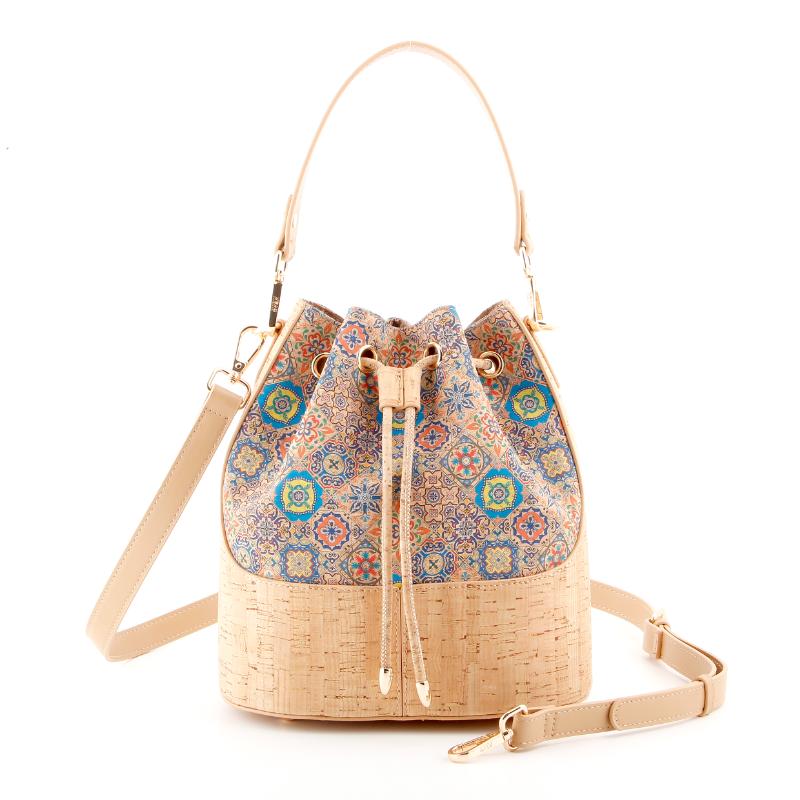
Inside the spacious and bright exhibition hall, the lighting is soft, and the display cabinets and island-style booths are neatly arranged. Various finished cork products, polished through complete processes, are displayed in abundance. Small and large cork handbags, shoulder bags, and cross-body bags are neatly arranged, along with small samples of cork fabric and matching cultural and creative accessories. Starting from the rough tree bark raw materials, through crushing and granulation, pressing into fabric, and then through the arduous process of new product development and sample making, each idea eventually turns into a complete product on the shelves.
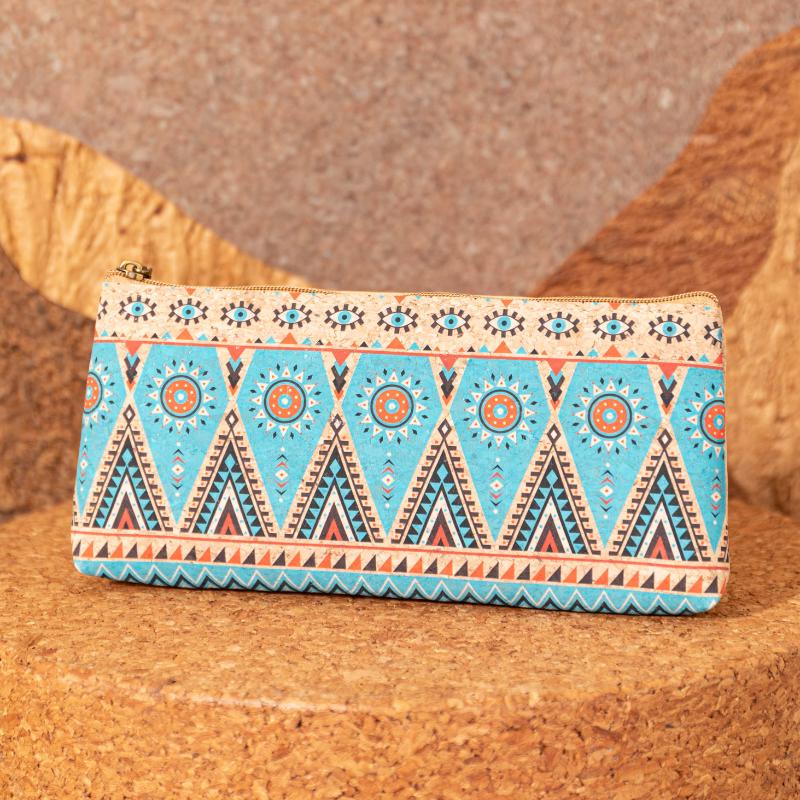
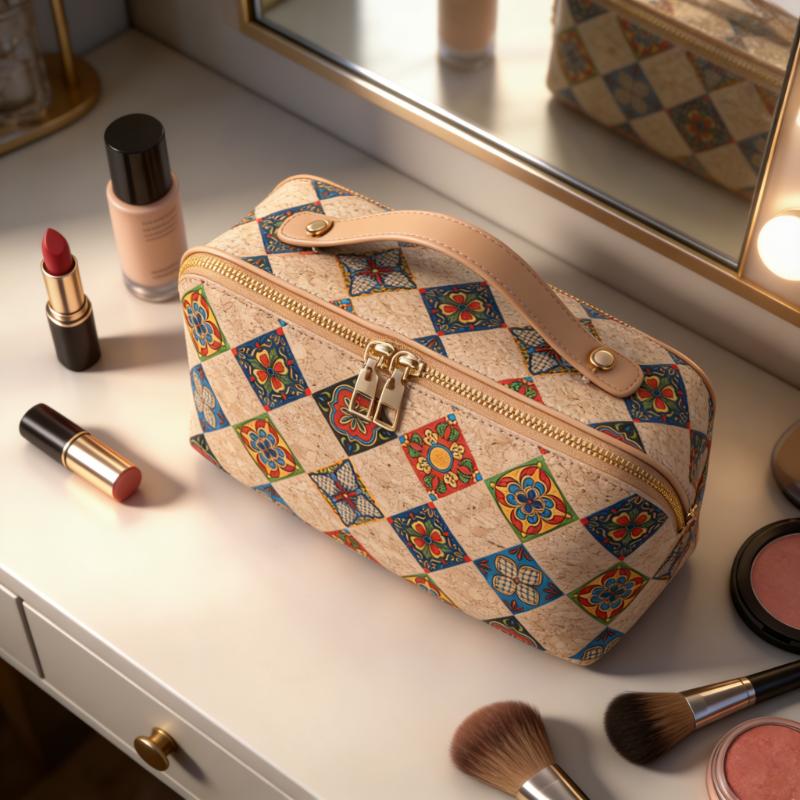
Different styles of cork bags each have their own unique features. Some have a grand and sturdy shape, suitable for business trips; others are lightweight and soft, fitting for daily leisure. Some products also blend traditional patterns with the cork material, combining the natural color of cork with distinctive prints, creating an Eastern aesthetic that combines tradition and modernity. The exhibition hall is not only a showcase for products but also a carrier for conveying the culture of cork to customers and consumers. Visiting customers can closely touch the real texture of the cork bags, feel the warmth from the natural material, and directly experience the unique advantages of the lightweight and warm texture of the cork material.


A Sustainable Journey of a Piece of Tree Bark: Nature, Craftsmanship and Business Coexisting
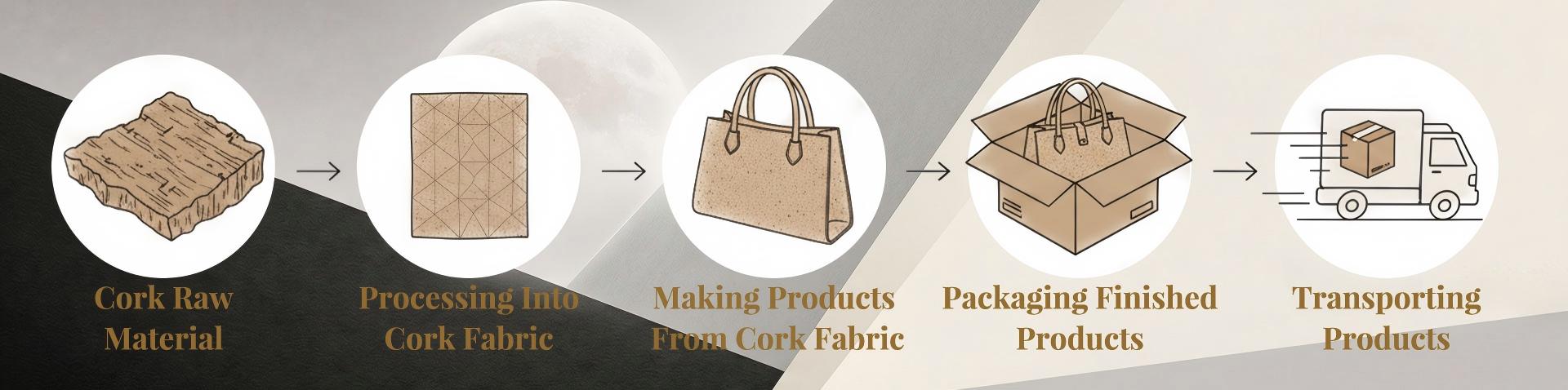
Throughout the entire complete industrial process, starting from the raw cork bark, it is crushed and processed into cork chips, then hot-pressed to form distinctive cork fabrics, followed by rigorous new product development, sample making, polishing and bag sample production. Finally, a large quantity of finished products are mass-produced and enter offline exhibition halls. The entire production chain fully implements the concept of sustainable development. The collection of bark does not harm the trees, and the leftover materials are recycled and crushed for reuse in production, maximizing the utilization of natural resources.
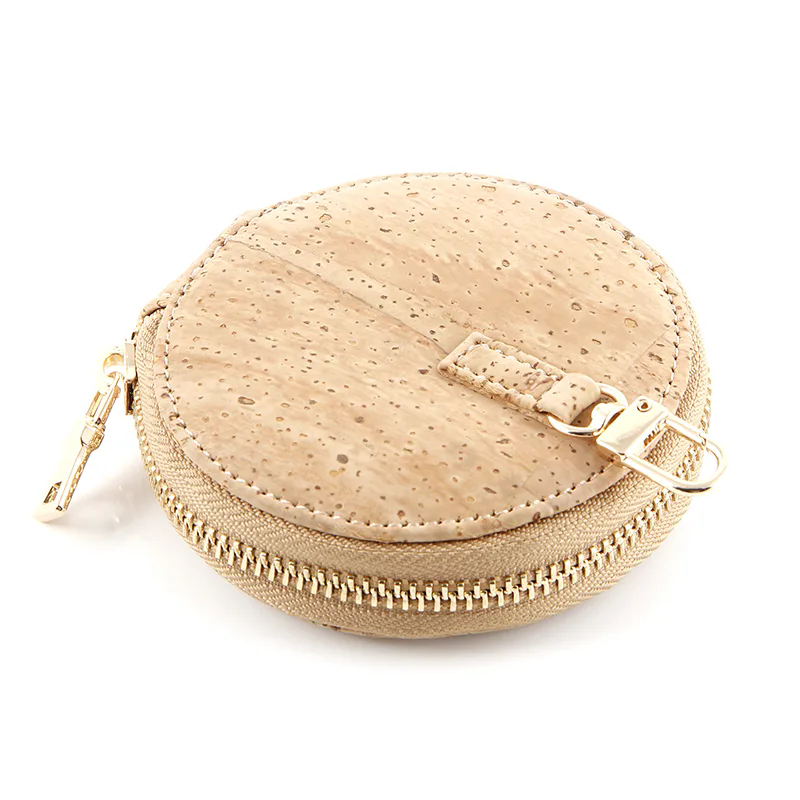
Today, the range of cork products is also continuously expanding. Besides various bags, it has also given rise to key accessories, makeup mirrors, notebook fabrics and other diverse cultural and creative products. From a single tree bark raw material, it has developed into a rich and complete product ecosystem. In the future, as green consumption continues to become more widespread, this gift from nature - cork - will also continue to innovate and shine with more possibilities in the fields of fashion and cultural creativity, allowing more consumers to experience the unique charm of natural materials and achieving a harmonious coexistence of nature, craftsmanship and business.
Related News
- How To Win Clients And Influence Markets with CORK
- 6 Reasons Why Vegan Cork Handbags Are Better!
- How to maintain the cork bag
- what is cork vegan leather – Nature’s Finest Choice
- Sustainable cork bags guide: everything you need to know
- Cork-Bags Industry Report: From Bark to Fashion, the Rise of Sustainability
Leave me a message