Cork-Bags Industry Report: From Bark to Fashion, the Rise of Sustainability
Cork-Bags Industry Report: From Bark to Fashion, the Rise of Sustainability
From Bark to Fashion: How Cork Bags Are Rewriting the Rules of Sustainability
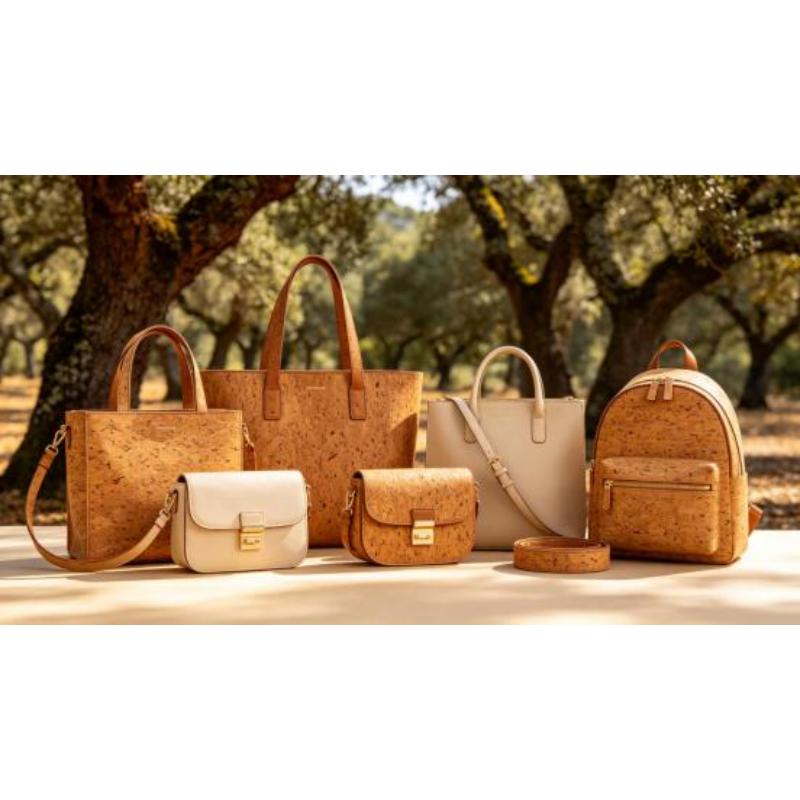
From Portugal’s oak forests to fashion shelves worldwide, cork bags are reshaping the accessories industry.
On commuter-lifestyle posts shared across Xiaohongshu and Instagram, more and more content creators carry bags with a distinctive texture. Lacking the fine grain of leather or the understated simplicity of canvas, these pieces feature a unique material defined by natural grain and warm brown tones — the cork bag.
ust a few years ago, cork bags remained a niche pick among eco-conscious communities and vegan-fashion enthusiasts. Today, ranging from Portuguese artisanal brands to fast-fashion giants, sold on Amazon and independent websites alike, cork bags are steadily entering the mainstream consumer market with quiet yet unstoppable momentum.
This industry insight addresses three core questions: What exactly is a cork bag? What stage has this industry reached? What key industry factors deserve attention going forward?
01 From Tree to Bag: What Is Cork?
Many people hearing about cork bags for the first time mistake them for accessories made of soft wood. In fact, cork is the outer bark of theQuercus suber(cork oak), not the tree’s inner wood.
Cork oaks grow mainly along the Mediterranean coast. Portugal accounts for roughly 55% of global cork output, with production also present in Spain and southern France. Annual global cork production totals around 340,000 tonnes, and Portugal alone produces more than half of the world supply.
Cork harvesting itself serves as a real-world textbook for sustainability. Skilled workers manually strip bark using specialized tools, without harming the tree’s living tissues. Harvested trees regrow fresh bark. A cork oak can live for 250-300 years and can be harvested every nine years, making cork one of the very few natural materials thatgrows more with harvesting.
At the microscopic level, cork consists of millions of air-filled honeycomb-shaped cells. This special structure delivers its signature properties: lightweight, waterproof, flexible, compressible, heat-insulating, sound-dampening, flame-resistant and wear-resistant. Suberin, a natural substance inside cork cells, grants cork its waterproof and gas-barrier performance.
Most importantly, cork is 100% biodegradable, renewable and recyclable. Containing no animal-derived ingredients, it is a genuine vegan material. Gentle on sensitive skin, cork sits close to human body temperature, feels comfortable to touch and rarely triggers allergic reactions.
02 Industry Landscape: Who Makes Cork Bags and Where Is the Sector Now?
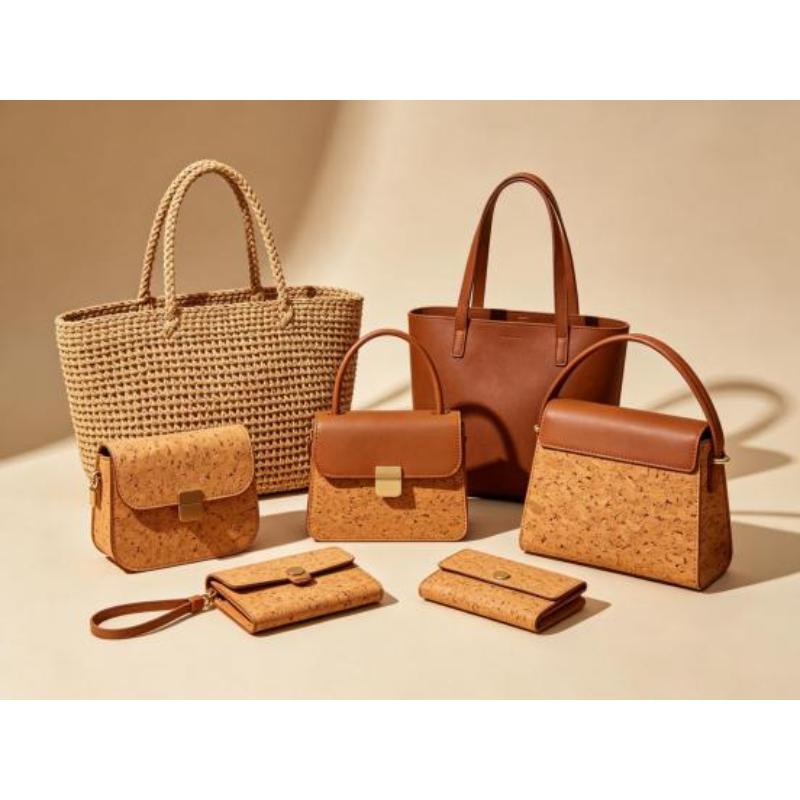
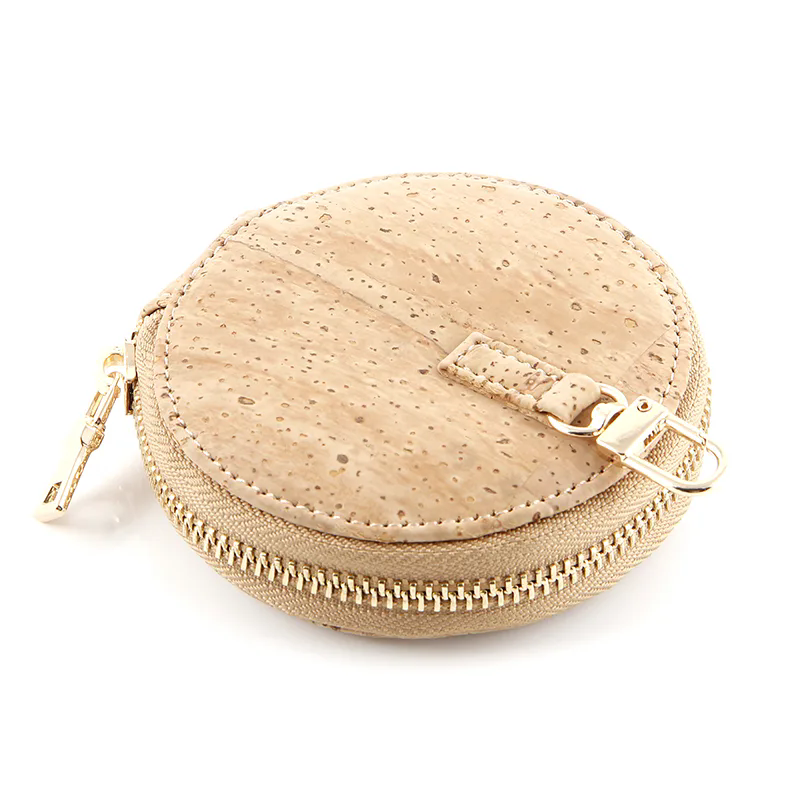
Product offerings span totes and woven styles to wallets and backpacks, breaking the early perception that cork bags are merely niche items.
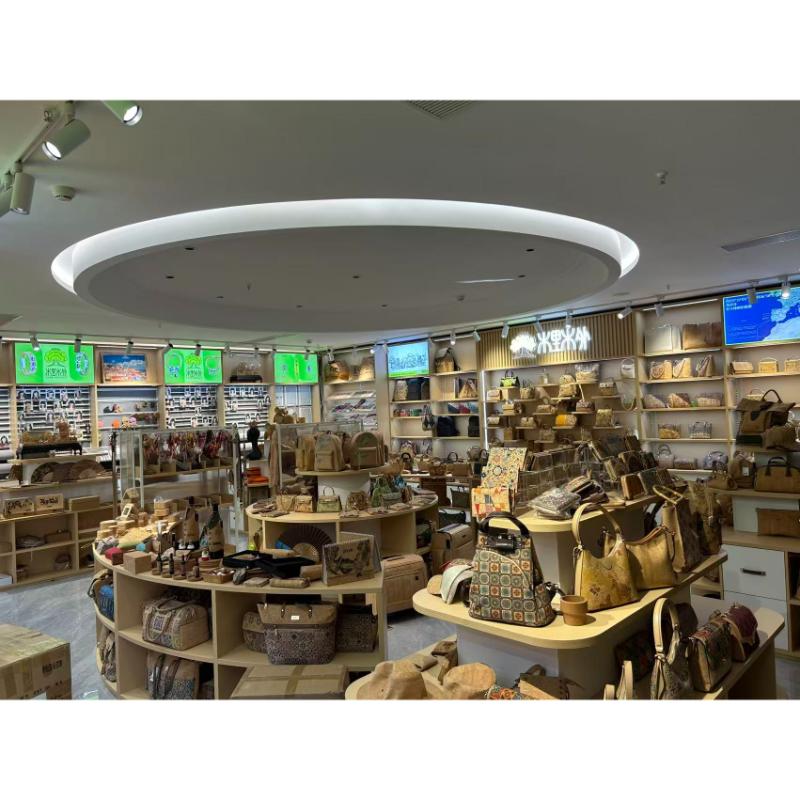
A clear brand hierarchy has formed across the global cork-bag market. It covers Portuguese local artisanal labels, international fashion giants, cross-border e-commerce factory stores and designer collaborations, addressing every price bracket from low-cost items up to hundreds of US dollars.
cork-products industryin Chinais transitioning from OEM contract manufacturing toward independent home-grown brands. Upstream raw-material supply relies heavily on imports: according to industry reports, approximately 76% of cork imported into China originates in Portugal. Nevertheless, downstream manufacturing is expanding rapidly. Bag manufacturers in Zhejiang, Guangdong and other regions are investing more in cork-product R&D. Enterprises suchashttps://www.liscork.com/operate global-facing independent websites, offering a full lineup including cork woven bags, backpacks and tote bags, while providing ODM/OEM services for fashion retailers and lifestyle brands worldwide.
In terms of product variety, cork goods have moved well beyond the early narrow offering of coin purses. Popular styles today include: cork tote bags for commuting and shopping; check-pattern cork bags for daily outings; cork backpacks for outdoor and campus use; men’s cork bags for lightweight travel; cork woven bags for holidays and leisure; plus small accessories such as wallets and card holders。https://www.liscork.com/also releases hybrid designs combining cork with denim, canvas and metallic hardware, challenging the stereotype that cork equals plain and simplistic aesthetics.
03 Why Now? Three Driving Forces Behind the Cork-Bag Boom
Cork itself is not a new material. The Portuguese have used cork for wine stoppers for centuries. Yet cork bags have only gained mass popularity in recent years, propelled by three concurrent driving forces
First, sustainable consumption has evolved from abstract ideals into real purchasing decisions. Per market insights from Search Insights, 67% of consumers now favour sustainable materials when shopping, and 59% actively opt for recyclable cork products. This percentage is even higher among urban consumers aged 25-40. As “eco-friendliness” stops being mere slogans and starts influencing purchase decisions, cork — a naturally sustainable material — unlocks structural growth opportunities for cork bags.
Second, vegan fashion has moved from niche subculture to the mainstream. Growing public awareness for animal welfare has expanded the vegan consumer base. “Animal-free composition” has transitioned from a specialised requirement into a standard specification for many brands. Cork stands out among vegan-leather alternatives as one of the few fully natural options. Compared with petroleum-based vegan alternatives such as PU synthetic leather, cork contains no harmful chemicals, polyurethane or plastic components and is fully biodegradable. This gives cork dual strengths across both vegan and eco-friendly criteria.
004 Key Industry Variables: Opportunities Alongside Challenges
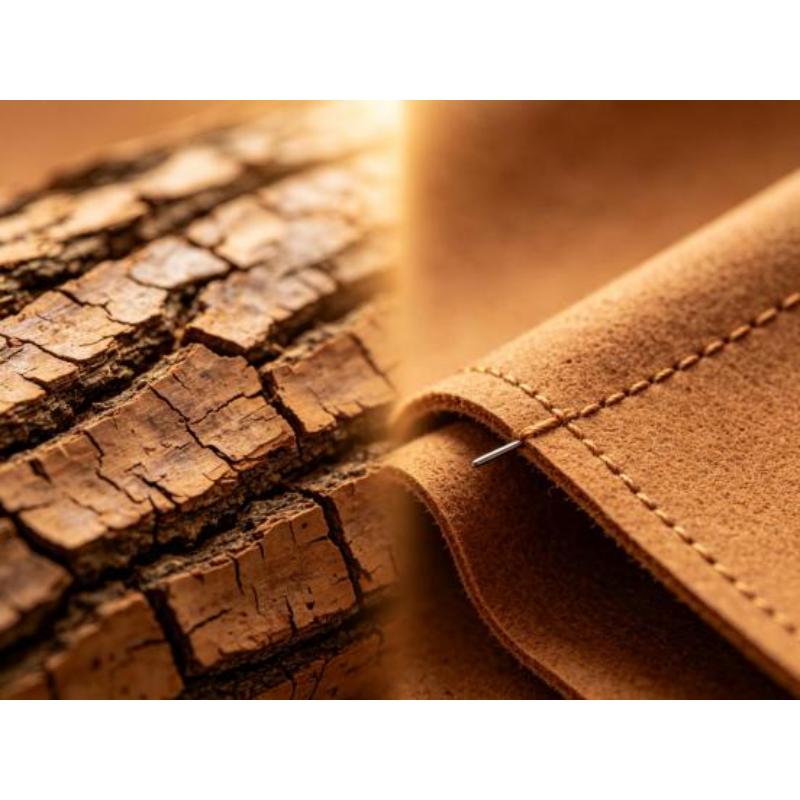
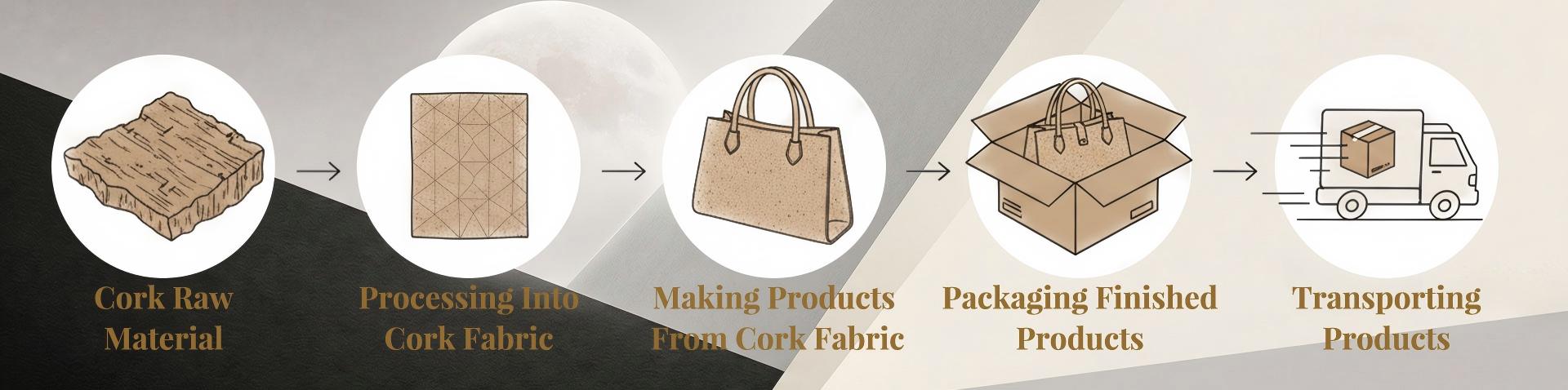
Between raw bark and finished fabric, cork-processing techniques directly define the durability and tactile quality of end-product bags.
While the growth outlook for cork bags is promising, the industry is far from guaranteed effortless success. Multiple critical variables shape its trajectory.
Supply-chain concentration represents the biggest structural risk. Global cork raw-material supply is heavily concentrated in Portugal. The cork oak’s growth cycle creates limited supply elasticity: a tree must grow for 25 years before its first harvest, after which it can only be harvested every nine years. Industry reports state that 43% of cork-goods manufacturers have faced raw-material shortages, and 32% are pressured by rising production costs. Climate change, wildfires and pest outbreaks may further amplify supply volatility in future. For brands and manufacturers, building stable, diversified raw-material sourcing is a more urgent priority than marketing campaigns.
Consumer understanding of cork bags remains in its early phase. Many buyers still hold stereotypes: “eco-friendly yet unattractive”, “niche yet impractical”. The whole industry faces the task of consumer education, helping customers grasp cork’s unique value: it is not a cheap substitute for leather, but a material with its own intrinsic properties.
Conclusion
The story of cork bags is fundamentally an exploration of how fashion can renegotiate its relationship with nature.
Its purpose is not to replace leather. Instead, it reminds the whole industry: premium materials need not come at the cost of the environment; distinctive textures need not come from animal hides; durability and light weight can co-exist. Holding a cork bag, you experience not only the tactile warmth of the material itself, but also a conscious choice — choosing a lifestyle kinder to nature and more authentic to oneself.
Looking ahead, what truly matters is not which brand shouts the loudest “most sustainable” slogan. What counts is securing stable supply chains, improving product quality and creating designs with genuine recognisable identity. This category will only reach full maturity when consumers select cork bags not merely for their eco-credentials, but because they look great, function well and are worth buying.
That moment may arrive sooner than many expect.
An accessories-industry environmental revolution begins with a single cork oak tree.
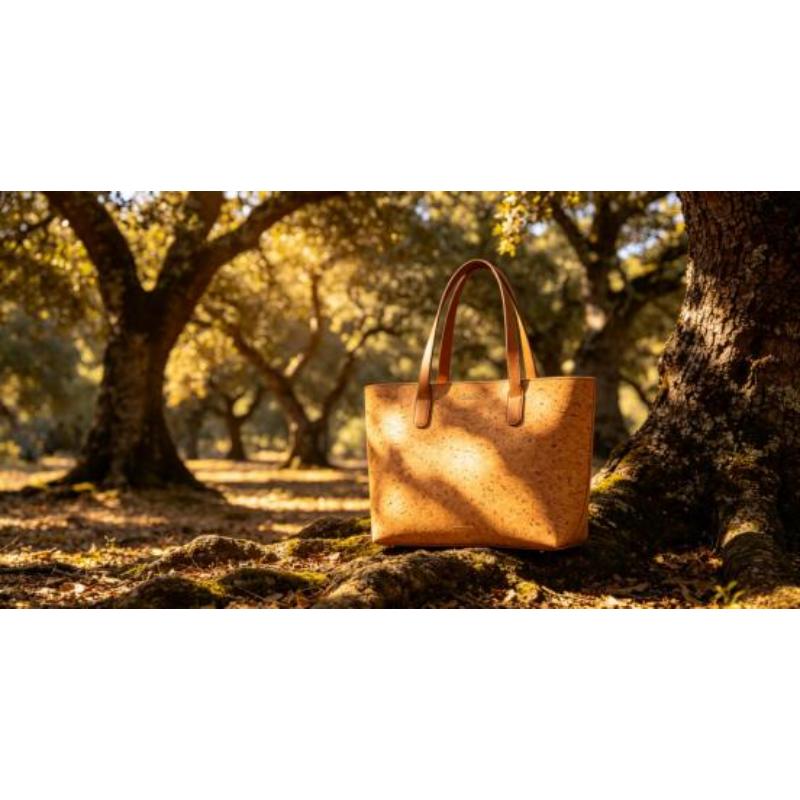
An eco-revolution for bags begins with a single cork-oak tree.
Related News
- Derived from nature, crafted for fashion: The transformation journey of a piece of cork bark
- How To Win Clients And Influence Markets with CORK
- 6 Reasons Why Vegan Cork Handbags Are Better!
- How to maintain the cork bag
- what is cork vegan leather – Nature’s Finest Choice
- Sustainable cork bags guide: everything you need to know
Leave me a message